
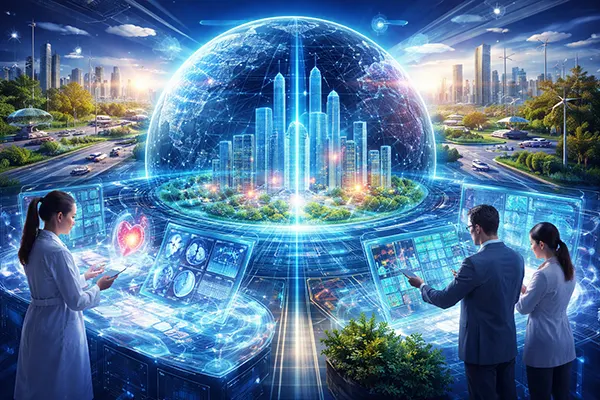
Digital Twins: How They Are Used Beyond Industrial Environments
Digital twin technology has moved far beyond its original engineering roots. Today, it is applied in healthcare, urban planning, education, and even cultural heritage. By creating accurate virtual representations of real-world systems, organisations can analyse behaviour, predict outcomes, and make informed decisions without direct intervention. This article explores how digital twins are used outside traditional industrial contexts and why they are becoming a critical tool across multiple sectors.
Digital Twins in Healthcare and Medicine
In healthcare, digital twins are increasingly used to model individual patients rather than generic populations. These models combine medical imaging, genetic data, lifestyle information, and real-time sensor inputs to represent a person’s physiological state. Doctors can use such systems to simulate treatment responses before prescribing medication or planning surgery.
Hospitals also apply digital twins to optimise internal operations. Virtual replicas of hospital buildings and workflows allow administrators to analyse patient flow, staff allocation, and equipment usage. This leads to reduced waiting times, improved safety, and more efficient use of limited resources.
Pharmaceutical research benefits from digital twins by accelerating drug development. Virtual biological models help researchers test how compounds interact with organs or cells, reducing reliance on early-stage animal testing and lowering development costs while maintaining scientific accuracy.
Ethical and Data Challenges in Medical Digital Twins
The use of personal health data raises serious ethical considerations. Digital twins rely on large volumes of sensitive information, which must be securely stored and processed. Compliance with data protection regulations such as GDPR is essential to maintain patient trust.
Another challenge lies in model accuracy. A digital twin is only as reliable as the data it receives. Incomplete or biased datasets can lead to incorrect predictions, which in healthcare may have serious consequences. Continuous validation by medical professionals remains necessary.
Despite these risks, responsible implementation is advancing rapidly. Medical institutions increasingly combine digital twin systems with transparent governance frameworks, ensuring that technology supports clinical expertise rather than replacing it.
Smart Cities and Urban Planning Applications
City authorities use digital twins to understand how urban systems behave under different conditions. Virtual city models integrate data from transport networks, energy grids, weather systems, and population movement. This allows planners to test infrastructure changes before committing public funds.
Traffic management is one of the most mature use cases. By simulating road usage in real time, municipalities can adjust traffic light patterns, plan new routes, and reduce congestion-related emissions. These models also support emergency response planning.
Environmental sustainability is another key area. Digital twins help cities measure air quality, noise pollution, and energy consumption at neighbourhood level. Policymakers can evaluate the impact of green initiatives using evidence rather than assumptions.
Digital Twins for Resilient Urban Development
Climate resilience has become a priority for many regions. Digital twins allow authorities to simulate floods, heatwaves, and infrastructure stress scenarios. This supports better preparation and risk mitigation strategies.
Urban digital twins also improve collaboration between stakeholders. Architects, engineers, and public officials can work from a shared data-driven model, reducing misunderstandings and costly redesigns.
As data availability improves, these systems are expected to become more precise. However, transparency in data sources and assumptions remains essential to ensure public confidence in technology-driven planning decisions.
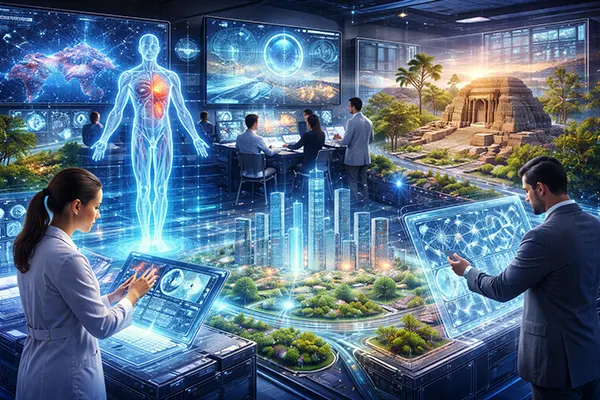
Education, Culture, and Social Applications
In education, digital twins support personalised learning environments. Virtual representations of students’ progress allow educators to adapt teaching methods based on performance patterns, learning speed, and engagement levels.
Cultural institutions use digital twins to preserve heritage sites and artefacts. Detailed virtual replicas of historical buildings enable conservation planning and remote access for researchers and the public, especially when physical preservation is difficult.
Social research also benefits from digital twins. By modelling population behaviour, researchers can study housing trends, public service usage, and demographic changes without intrusive data collection methods.
Future Social Impact of Digital Twin Technology
As digital twins become more accessible, their social influence will expand. Smaller institutions, schools, and local communities are beginning to adopt simplified versions of this technology.
Responsible use remains a key factor. Clear communication about how models are built and used helps prevent misuse or misinterpretation of simulated outcomes.
By 2025, digital twins are no longer experimental tools. They are established decision-support systems that, when applied thoughtfully, contribute to better healthcare, smarter cities, and more inclusive education.